The Touchline Welcome: A First-Match Plan for New Supporters
A first rugby match plan helps new supporters arrive calmly, choose a good place to watch and join the touchline atmosphere at their own pace.

A first rugby match plan begins before you reach the gate: you want to know where to go, what to bring and how to feel part of the day without pretending you already know the game. A club match can be welcoming and informal, but the ground may have its own layout and habits. A little preparation leaves room to enjoy the rugby rather than study everyone else for cues.
In the days before, make the visit easy to picture
Check the fixture details and the club’s public information for the address, entry arrangements, start time and any notes about parking or seating. If you are going with someone, agree on a meeting point outside the entrance in case you arrive separately. A short message to the club or a familiar supporter can answer practical questions such as whether spectators usually stand or whether there is a covered area.
Think about the weather and the ground surface, not just the forecast. A touchline can be breezy, muddy or exposed, so choose comfortable shoes and layers you can adjust. Bring only what you will want to carry; a warm drink in a suitable flask may help on a cold day, while a small umbrella can obstruct the view of people behind you.
There is no need to memorize the laws before you go. Knowing that play can pause for a scrum or a lineout gives you a rough sense of what you are seeing, but asking a companion what happened is perfectly ordinary. Let curiosity do more work than preparation.
On arrival, find the shape of the ground
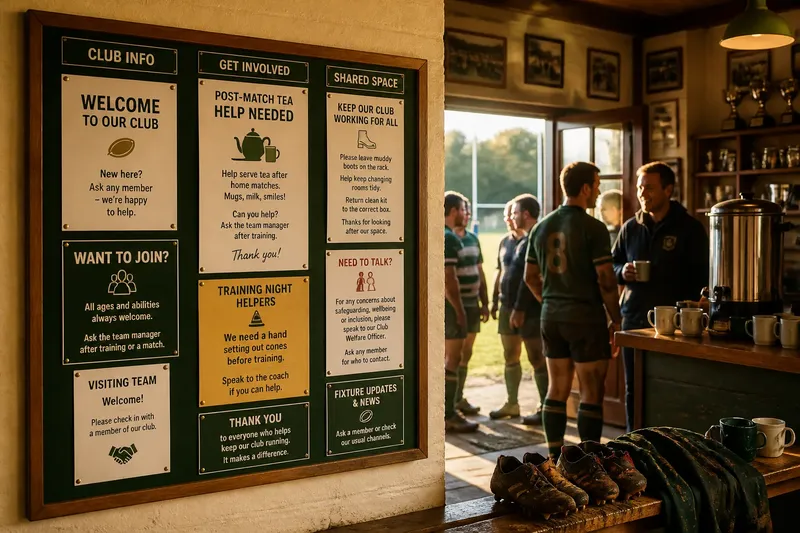
Arrive with enough time to locate the entrance, toilets and any refreshments before settling in. If the club has volunteers near the gate, a simple question such as “Where’s a good place to watch?” is more useful than trying to infer the local routine from a distance. At a small ground, the person selling tea may also know where spectators tend to gather.
Take a moment to notice the touchline and any marked spectator areas. Keep clear of team benches, officials and routes used by players, and follow signs or a volunteer’s direction. If the boundary is not obvious, ask before choosing a spot; the safest viewing position is one that does not interfere with the match.
Say you arrive at a community ground with a friend, a wet forecast and no idea which side to choose. You ask a volunteer whether the far touchline is open to spectators, then stand where you can see the halfway line and move under cover when the rain starts. The visible result is simple: you have a view of the action, know where you can stand and can pay attention to the match.
At kickoff, choose a comfortable way to watch
You do not need to follow the ball with perfect understanding to enjoy a match. Watch how players line up after a stoppage, notice the referee’s signals and listen for the way teammates communicate. The pattern often becomes clearer as you see it recur.
If you are standing, leave space around you and avoid blocking someone’s established view. If a seat or sheltered area is available, use it without feeling that you must remain there for the whole game. A first visit is easier when you can adjust your position, take a brief break or step away from the noise.
Applause is an easy way to join in without knowing the club’s chants. Follow the crowd when a good passage of play earns a response, and feel free to keep your reactions natural. Supporters may call encouragement to familiar players, but no one needs to perform enthusiasm on command.
During the match, join the atmosphere at your own pace
Try one small point of contact with the people around you: ask which team is playing toward which end, or whether a stoppage is for a scrum or a penalty. Most questions can be answered in a sentence, and a brief exchange gives you a foothold without demanding a long conversation. If the person is watching closely, let the game take priority.
Some clubs have a lively crowd; others are quiet enough to hear instructions from the field. Neither mood requires you to change your personality. You can chat at the interval, cheer when something catches your eye, or simply watch. The welcome is not a test of how loudly or often you join in.
For a first match, it can help to keep one familiar reference point: the halfway line, the scoreboard or the person you came with. If the action becomes hard to follow, return your attention there and wait for play to settle. You are allowed to lose track for a moment and pick it up again.
After the whistle, leave with one useful connection
When the match ends, give players and officials room to leave the field. If you want to say hello, wait for a natural moment rather than crossing into an area reserved for teams. A short “Thanks, I enjoyed watching” to a volunteer or host is enough to acknowledge the welcome.
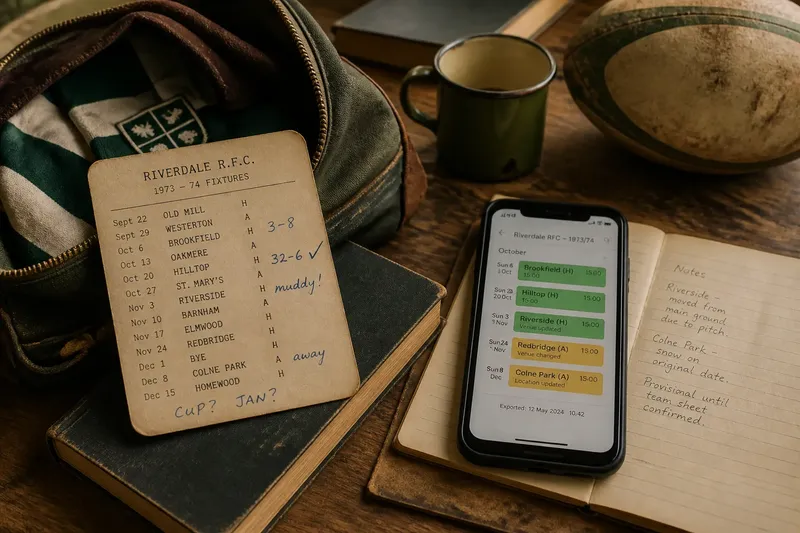
Before you go, note one practical detail for next time: which entrance you used, where you found shelter or where spectators gathered. If you would like to return, ask where upcoming fixtures are announced or whether the club has a public match-day contact. That question helps you plan another visit without assuming you need to become a member first.
What do new rugby supporters often wonder?
Do I need to understand rugby before I go?
No. You can enjoy the contest and ask a companion about unfamiliar moments as they happen. A basic sense of how play restarts may help, but learning every law is not a condition of being welcome.
Where should I stand at a rugby match?
Choose a marked spectator area with a clear view, and keep away from team and officials’ spaces. If the ground’s boundaries are unclear, ask a volunteer before settling in.
What should I wear to watch rugby?
Dress for the weather and for standing on grass or uneven ground, with comfortable shoes and layers. A small bag is easier to manage than several loose items, especially if you need to move for shelter.
Do I have to join in with chants or club traditions?
No. A smile, a question or applause when the crowd responds can be enough. You can take part more as you become familiar with the people and the match-day atmosphere.
A first rugby match plan is most useful when it gives you options rather than rules: check the practical details, ask where spectators belong, and choose the level of conversation and cheering that feels natural. Once you know the ground and recognize a few faces, returning can feel less like arriving somewhere new and more like picking up a familiar afternoon.