Wash Bag, Airing Space or Kit Basket: Where Should Damp Gear Go?
Damp rugby kit needs somewhere to dry without spreading through a shared room. Compare a wash bag, airing space and kit basket to choose a workable setup.
Where should damp rugby kit go when you get home: into a wash bag, onto an airing space, or into a kit basket? The right choice depends less on the container’s name than on whether air can reach the fabric, wet items stay apart from dry ones, and the setup fits the room you actually have.
Each option solves a different part of the problem. A wash bag contains gear for carrying, an airing space gives it room to dry, and a basket keeps items together while allowing some circulation. Trouble starts when one is expected to do all three jobs at once.
Start with the problem, not the container
Damp socks tucked into a closed bag may stay wet; a shirt draped over a crowded radiator may remain bunched and musty; a basket with a solid lid can trap moisture much like a bag. Before changing your storage, notice where the kit goes immediately after use and what happens to it there.
Look for practical clues: fabric still cool or clammy when you reach for it, a persistent stale smell, wet items touching clean clothes, or gear spread across a hallway. These point to different causes. A lingering damp patch calls for more airflow, while mixed clean and used kit calls for clearer separation.
Choose one issue to address first. A new container cannot compensate for clothes left folded in a heap.
A wash bag is for containment and transport
A wash bag is useful between the field and home, particularly when muddy boots or a wet jersey would otherwise touch a car seat or clean belongings. Mesh panels can let some air pass through, while a fully enclosed fabric or plastic bag prioritizes keeping its contents contained.
The common problem is forgetting that “wash bag” does not mean “drying space.” Leave damp kit sealed inside and moisture has little opportunity to escape. Even a mesh bag can dry poorly if it is packed tightly, hung against a wall, or filled with a wet towel wrapped around smaller items.
Use the bag as a temporary carrier, then empty it when you arrive. If laundry has to wait, separate the damp items from dry kit rather than leaving everything zipped together. Check the bag itself for wet corners and let it air out too.
An airing space works when fabric can breathe
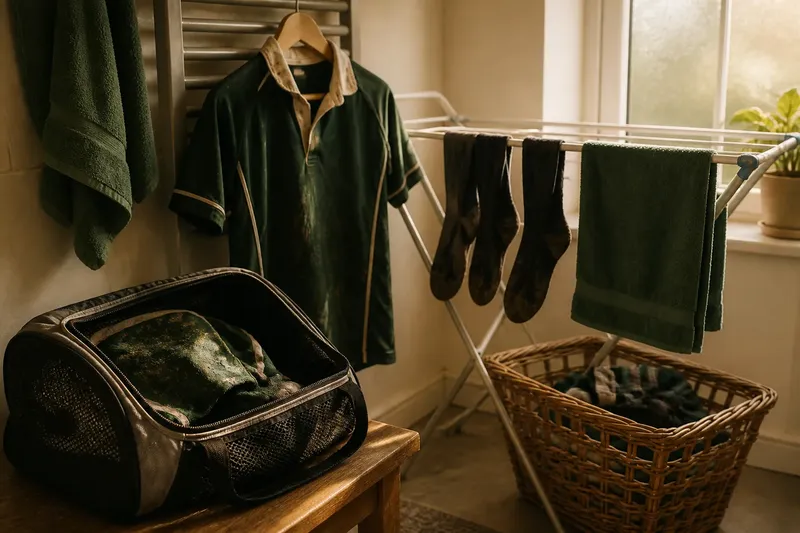
An airing space can be a clothes rack, a line, or a clear section of a bathroom or utility room. Its advantage is direct exposure to moving air: jerseys can hang open, socks can be spread apart, and a towel can be laid flat instead of folded over wet clothing.
The usual snag is not a lack of equipment but overcrowding. When sleeves overlap or several layers are draped over one rail, the inner surfaces stay sheltered. A warm room does not solve that if damp fabric remains pressed together; give each item enough room to hang or lie open.
Pick a spot where drying gear will not block a doorway or be brushed by people passing. If the only available area is shared, a small folding rack can be opened for drying and put away afterward. Keep kit clear of heat sources unless the appliance’s instructions expressly allow clothes to be placed there.
A kit basket keeps the routine contained
A basket is a useful landing place for items that need sorting, especially when there is no room for a permanent rack. An open-sided basket is generally more suitable for damp gear than a closed hamper because air can pass around its contents. It can also keep socks, base layers, and training accessories from migrating through the house.
The common mistake is treating the basket as a place to store wet kit until the next session. A pile hides the dampest pieces in the middle, and a solid-bottom basket can hold moisture beneath them. Take wet garments out to dry rather than relying on the basket to finish the job.
Use a basket as a boundary, not a drying promise: dry gear may stay in it, while wet gear goes onto an airing space. If the basket must hold damp items briefly, keep the load loose and empty it as soon as you can.
Why does the setup keep failing?
Why does rugby kit still smell after airing?
It may have been hung while folded, crowded against other clothes, or left in a bag before it reached the rack. Open the fabric out and separate the layers; if the odor remains after washing, clean the storage container too.
Can damp kit go straight into a wash bag?
For the trip home, yes, if the bag keeps wet gear from touching other belongings. At home, empty it rather than treating a closed bag as long-term storage.
Is a basket better than a wash bag?
They do different jobs: a bag contains kit for carrying, while an open basket organizes it at home. For drying, neither is as useful as an arrangement that exposes the fabric to air.
What if there is no room for a rack?
Use a temporary line, a few separate hangers, or a clear area where items can be spread without touching. If space is especially tight, dry the wettest layers first and keep them apart from clean clothes.
Match the choice to your available space
In a shared hallway, a closed wash bag may keep mud contained during the journey, but it should not become a permanent fixture. At home, a folding rack in a bathroom or utility area can provide temporary drying space without claiming a whole room. In a small apartment, a few hangers placed apart may be more useful than a large basket that encourages a heap.
Imagine you return from training with a damp jersey, muddy socks, and a wet towel, but only have a narrow bathroom corner free. You carry them in a wash bag, then hang the jersey open on a hanger, spread the socks separately, and lay the towel across a rack; the empty bag is left unzipped to dry. The observable aim is that none of the items remains folded together or sealed away while it is damp.
For a club changing room, agree on a clear distinction between temporary transport and storage. A bag can carry a player’s kit home; a shared basket should not become a catch-all for other people’s wet gear. If the club provides drying facilities, follow its posted arrangements and leave the space usable for the next person.
Choose a simple sequence that can be repeated
The best setup is one you can manage after a tiring session. A short routine prevents the wash bag, airing space, and basket from competing for the same job:
- Contain for the journey. Use a wash bag to keep wet or muddy items away from clean belongings.
- Empty the bag at home. Do this before setting the kit aside, and check for damp fabric caught in a pocket or corner.
- Separate wet from dry. Keep worn layers apart from spare socks, clean clothes, and accessories.
- Open up the fabric. Hang jerseys and shorts freely; spread out socks, towels, and base layers rather than bundling them.
- Use the basket for organization. Put away dry kit, or keep items awaiting laundry loose and separate from clean gear.
- Air the containers. Leave the bag open and the basket accessible so their own interiors do not stay damp.
Change the arrangement if the same item repeatedly comes out clammy or the drying area becomes an obstacle. The answer may be as small as moving the rack away from a crowded corner or replacing a solid-lidded hamper with an open basket.
Let airflow decide where damp kit goes
For damp rugby kit, a wash bag is best understood as a carrier, an airing space as a place to dry, and a kit basket as a way to keep belongings organized. If you have room for only one permanent container, choose it for the job it can genuinely do, and create a separate temporary place for wet fabric to breathe.
After the next session, notice which item stays damp longest and where it was left. Make one change to that part of the routine, then keep the rest familiar. That small adjustment is usually easier to maintain than adding another container.